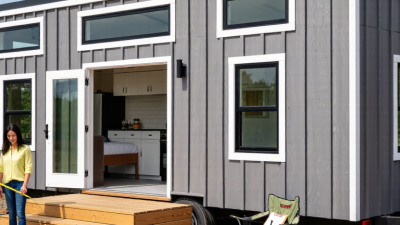
How to Choose Tiny Trailer Homes for Global Buyers?
Choosing tiny trailer homes for global buyers requires more than admiring compact interiors and polished photographs. A trailer can look spacious online, yet feel narrow beside a queen bed and kitchen aisle. The right decision connects mobility, construction quality, climate, towing capacity, and local compliance. It also depends on how the home will be used: weekend travel, seasonal living, emergency accommodation, or full-time residence.
Industry data shows why this category deserves careful evaluation. The Recreation Vehicle Industry Association reported 313,174 wholesale RV shipments in 2023, confirming sustained demand for mobile living products in a mature market. Grand View Research has also identified growing interest in compact housing, driven by affordability pressures, urban density, and flexible lifestyles. However, tiny homes and towable RVs are not identical products. Their standards, insurance requirements, taxation, and registration rules may differ across countries and regions. Buyers should verify these details with qualified local authorities and certified professionals.
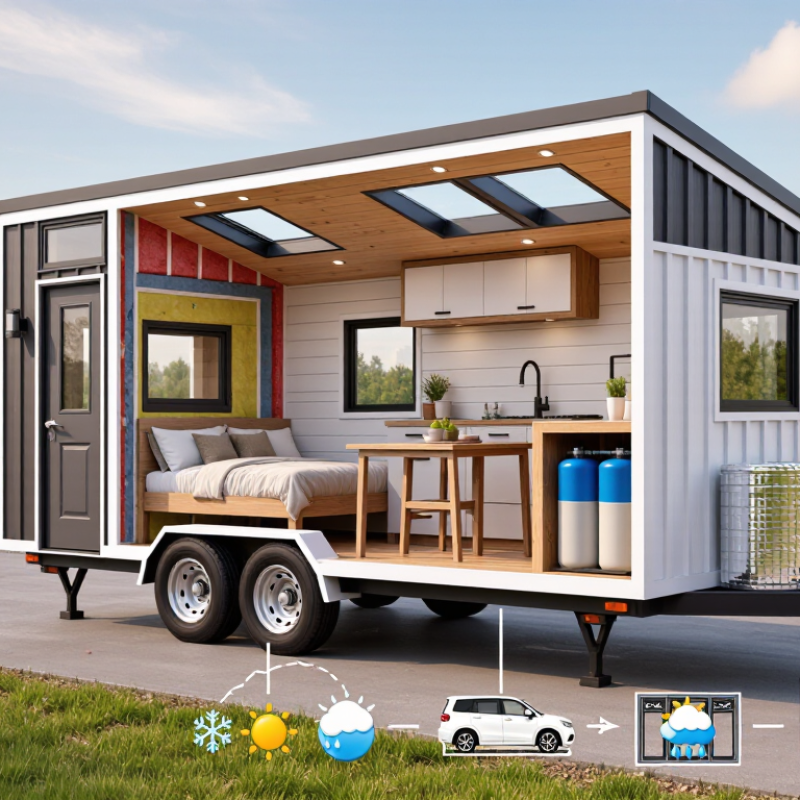
Look closely at the frame, axle rating, insulation layers, ventilation openings, and water systems. A lightweight trailer may reduce fuel use, but limited payload can restrict furniture, batteries, and personal belongings. In colder climates, condensation control matters. In hot coastal areas, corrosion protection matters more than decorative finishes. Ask for independent inspection records, warranty terms, manufacturer specifications, and realistic delivery costs. Some advertised prices exclude transport, permits, taxes, and site preparation. That can change the budget quickly.
No single model fits every country. A practical comparison remains essential. In the following guide, global buyers can assess tiny trailer homes through evidence, not showroom excitement, while recognizing that even experienced buyers may overlook one costly detail.
Define Your Purpose, Lifestyle, and Tiny Trailer Home Requirements
How to Choose Tiny Trailer Homes for Global Buyers?
Define your purpose before comparing layouts, materials, or decorative details. Will the trailer serve as a weekend retreat, a full-time residence, or a mobile workspace? Each purpose changes the required insulation, storage, power capacity, and sleeping arrangement. A family needs different circulation space than one remote worker. Write down an ordinary day, including cooking, showering, working, and storing outdoor equipment.
Your lifestyle should guide the floor plan. A cold-climate buyer may need thicker insulation, sealed windows, and reliable heating space. In hot regions, cross-ventilation, shade, and efficient cooling become more important. Measure the items you actually use, such as a 60-centimeter suitcase or a folding bicycle. Do not trust attractive drawings alone. Stand inside a display unit if possible, and test the door, bed access, and kitchen movement.
Technical requirements deserve careful verification. Check total weight, payload, hitch compatibility, braking systems, water capacity, and electrical connections. Local road rules and registration requirements can differ significantly between countries. Ask for written specifications and maintenance guidance. A common mistake is choosing maximum space instead of manageable weight. That decision may create towing stress, higher fuel use, and difficult parking. I would also leave some empty storage capacity. Real life usually brings more belongings than expected. Tiny living sounds simple. It is not always forgiving.
Check Local Laws, Zoning Rules, Towing Standards, and Import Regulations
Choosing a tiny trailer home starts with local rules, not floor plans. Before paying a deposit, contact the municipal planning office and request written zoning guidance. Some areas allow camping but prohibit full-time residence. Others require a permanent foundation. Rules can change by district. Ask about setbacks, utility connections, occupancy limits, and parking duration. An experienced local planner can identify conflicts that online listings often miss.
Road safety is equally important. Check the permitted gross trailer mass, axle rating, hitch class, brake system, lighting, and tire markings. Your vehicle must legally tow the loaded trailer, not merely its empty weight. Measure the actual tongue weight after fitting furniture, water tanks, and batteries. Ask an authorized inspection center to verify dimensions and road equipment. Small mistakes matter. Check twice. A trailer that fits a driveway may still exceed a bridge limit or ferry restriction. Keep certified weight records, photographs, and repair documents.
Import regulations deserve early attention. Confirm whether the destination requires type approval, customs declarations, safety certificates, emissions evidence, or special registration. Prepare the invoice, packing list, ownership documents, chassis identification, and country-of-origin records. Tax treatment varies widely, even between neighboring countries. Use a licensed customs broker and verify every fee with the official authority. Do not rely on a seller’s verbal promise. My paperwork assumptions have been too optimistic before. If one document is missing, clearance may stall while storage charges grow.
Maximum standard road width shown for a trailer or vehicle combination before special exemptions may apply: Australia generally 2.50 m, the European Union 2.55 m, the United Kingdom 2.55 m, and the United States 2.59 m (102 in). Buyers should confirm local zoning, towing, registration, customs, and import requirements because exemptions and regional rules can differ.
Reference basis: Australian Road Rules, EU Directive 96/53/EC, UK Construction and Use Regulations, and typical U.S. federal maximum vehicle width under 23 CFR §658.15.
Compare Floor Plans, Dimensions, Materials, Utilities, and Essential Features
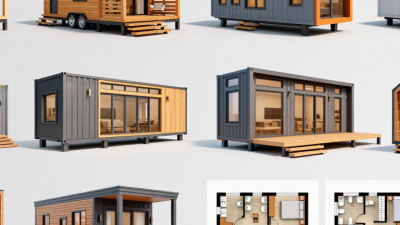
Choosing a tiny trailer home starts with the floor plan, not the appearance. A single-level layout suits older users and frequent moves. Loft designs create sleeping space, but steep ladders may become frustrating. A compact wet core can reduce plumbing runs and maintenance. Measure every doorway, bed, appliance, and storage compartment. A beautiful loft can be a mistake.
Dimensions must match towing capacity, road restrictions, and the buyer’s destination. Trailer length alone is not enough. Check axle ratings, tongue weight, braking equipment, tire load ratings, and turning clearance. Local approval requirements can differ widely. For electrical systems, compare voltage, frequency, shore connection, battery capacity, and solar readiness. Water buyers should inspect fresh, grey, and wastewater tank sizes. Add freeze protection for cold regions.
Material choices affect comfort and long-term cost. Well-sealed wall assemblies, durable roofing, and corrosion-resistant framing matter more than decorative finishes. The UNEP Global Status Report for Buildings and Construction 2023 reports that buildings and construction produce about 37% of global energy-related and process carbon dioxide emissions. Efficient insulation and ventilation therefore deserve serious attention. The International Energy Agency also identifies building efficiency as central to reducing energy demand. Include smoke alarms, carbon-monoxide alarms, safe exits, and accessible service panels. Follow relevant standards, such as NFPA 1192 where applicable, but verify local rules. I would still request independent inspection records; brochures rarely reveal condensation problems.
Evaluate Mobility, Safety, Climate Adaptation, and Construction Quality
How to Choose Tiny Trailer Homes for Global Buyers?
Mobility begins with the road, not the floor plan. Check the trailer’s loaded weight, axle rating, hitch system, brakes, tire age, and turning clearance. The World Health Organization’s Global Status Report on Road Safety 2023 reports about 1.19 million road deaths annually. Poor load distribution can make a compact home dangerously unstable. Ask for measured weights, not optimistic brochures. I would also confirm towing requirements with local authorities before purchase.
Safety must continue inside the cabin. Look for tested smoke alarms, safe electrical wiring, emergency exits, fire-resistant materials, and secure gas installations. Standards such as ISO 10239 can guide gas-system checks for recreational vehicles. Climate adaptation matters just as much. The World Meteorological Organization reported that 2023 was approximately 1.45°C above the pre-industrial average. Choose roof drainage, corrosion protection, ventilation, insulation, and heat-resistant windows for the destination. A home designed for dry weather may struggle in humid monsoon conditions. Small details matter.
Construction quality is visible in hidden places. Inspect welds, chassis joints, sealant lines, floor edges, and water stains. The 2023 UNEP Global Status Report for Buildings and Construction states that buildings produce about 37% of global energy-related emissions. Better insulation can reduce cooling demand and improve comfort. Request material specifications, inspection records, warranty terms, and repair access. No checklist is perfect. I still treat unexplained gaps as warning signs. A lightweight trailer may save fuel, yet excessive weight reduction can weaken durability. Mobility, safety, climate fit, and build quality must be judged together.
How to Choose Tiny Trailer Homes for Global Buyers? – Evaluate Mobility, Safety, Climate Adaptation, and Construction Quality
| Evaluation Area | Measurable Dimension | Practical Benchmark for a Tiny Trailer Home | Global Buyer Relevance | Recommended Verification | Indicative Priority |
|---|---|---|---|---|---|
| Mobility | Overall width | Approximately 2.10–2.55 m, excluding removable mirrors or accessories. | Width affects road access, toll-road restrictions, ferry charges, parking, and permit requirements. Limits vary by country and road authority. | Measure the finished exterior width and compare it with the legal maximum for the destination country and planned route. | High |
| Mobility | Gross Vehicle Weight Rating | Common compact units are approximately 1,500–3,500 kg GVWR. The loaded trailer must remain below its certified rating. | GVWR determines towing-vehicle compatibility, registration class, braking requirements, and payload capacity. | Check the identification plate, axle ratings, tire load ratings, and a certified weighbridge ticket when fully equipped. | High |
| Mobility | Payload capacity | A practical target is at least 300–600 kg after accounting for water, gas cylinders, batteries, furniture, appliances, and personal goods. | Low payload can cause overloading after export, seasonal equipment, or off-grid systems are added. | Request an itemized empty-weight calculation and subtract it from the certified GVWR. Include a realistic reserve. | High |
| Mobility | Tongue or drawbar load | Many conventional trailers are designed around roughly 10–15% of loaded trailer mass on the hitch, subject to local rules and manufacturer limits. | Incorrect hitch load can produce sway, poor steering, excessive rear-axle loading, or unsafe braking behavior. | Confirm the tow vehicle's permitted hitch load and measure the loaded trailer with a calibrated scale before travel. | High |
| Mobility | Braking and stability equipment | Use service brakes suitable for the trailer mass, a rated coupling, safety chains or equivalent, breakaway protection where required, and properly rated tires. | Equipment requirements differ by jurisdiction, especially above specific weight thresholds. | Inspect certification markings, brake-controller compatibility, breakaway operation, tire date codes, and coupling capacity. | High |
| Safety | Fire and carbon-monoxide protection | Provide smoke alarms, carbon-monoxide alarms where combustion appliances are installed, a suitable fire extinguisher, and clear escape routes. | Combustion appliances, cooking equipment, batteries, and compact floor plans increase the importance of early warning and evacuation. | Check alarm placement, test dates, ventilation, extinguisher rating, appliance shut-off access, and emergency egress dimensions. | High |
| Safety | Electrical protection | Include overcurrent protection, grounding or earthing, residual-current protection, protected cable routing, and separate circuits for high-load appliances. | Electrical standards and supply voltages differ internationally, commonly including 120 V or 230 V systems at 50 or 60 Hz. | Obtain wiring diagrams, inspect the distribution board, verify voltage and frequency compatibility, and use a qualified local electrician. | High |
| Safety | Structural and road-load design | The chassis, axle mounts, floor, wall connections, roof, and furniture anchorage should be engineered for both static occupancy and dynamic towing loads. | Road vibration, emergency braking, potholes, and repeated loading can reveal weaknesses that are not visible when the unit is stationary. | Request structural calculations, axle and chassis documentation, fastener specifications, and evidence of road-load or equivalent testing. | High |
| Climate Adaptation | Thermal insulation | For cold climates, continuous insulation and reduced thermal bridging are more important than thickness alone. A whole-envelope U-value or verified R-value should be provided. | Insulation performance affects heating demand, condensation risk, comfort, and battery or generator use in off-grid conditions. | Ask for wall, roof, and floor assembly details, insulation type and thickness, thermal-bridge treatment, and condensation-control design. | High |
| Climate Adaptation | Ventilation and humidity control | Provide controllable ventilation in kitchens and bathrooms, with moisture-resistant finishes and a plan for drying wet clothing and equipment. | High humidity can cause mold, corrosion, and hidden decay, especially in cold or tropical climates. | Check exhaust airflow specifications, vent locations, make-up air provisions, vapor-control layers, and service access for inspection. | High |
| Climate Adaptation | Hot-climate performance | Use a reflective or light-colored roof, shaded windows, cross-ventilation, insect screens, and provisions for efficient cooling. | Solar gain can make a small interior overheat quickly, while poorly ventilated assemblies may trap heat and moisture. | Review window orientation, glazing specifications, roof ventilation, shading options, air-conditioner electrical demand, and condensate drainage. | High |
| Climate Adaptation | Cold-weather water systems | Water tanks, pipes, pumps, and waste lines should be insulated or located within a conditioned envelope; exposed lines need freeze protection. | Frozen water can split pipes, damage pumps, and make the home unusable even when the interior remains warm. | Trace all water lines, identify low points and drain points, and confirm the manufacturer's minimum operating temperature. | High |
| Climate Adaptation | Wind and precipitation resistance | Roof drainage, sealed penetrations, flashing, window seals, and anchoring provisions should be appropriate for the local wind and rainfall exposure. | Coastal storms, heavy rain, snow loads, and strong seasonal winds can exceed assumptions made for mild climates. | Request design wind and snow-load assumptions, inspect roof penetrations, and confirm site anchoring requirements with a local professional. | High |
| Construction Quality | Chassis corrosion protection | Look for galvanized or suitably coated steel, sealed joints, protected wiring, drainage openings, and accessible inspection points. | Salt spray, road de-icing chemicals, tropical humidity, and standing water accelerate corrosion. | Inspect underside coatings, welds, drainage paths, fasteners, and areas around suspension mounts. Ask for coating specifications. | High |
| Construction Quality | Moisture management | Exterior walls and roofs should use continuous water-shedding layers, properly lapped flashing, sealed penetrations, and repairable joints. | Water intrusion is one of the most expensive and difficult defects to detect after delivery. | Conduct a hose test where appropriate, use a moisture meter, inspect corners and roof penetrations, and review sealant maintenance intervals. | High |
| Construction Quality | Materials and fasteners | Use materials suited to vibration and humidity, with corrosion-resistant fasteners in wet or coastal zones and flexible joints where movement is expected. | Rigid household construction methods may fail when exposed to continual road vibration. | Request material schedules, fastener grades or corrosion classes, adhesive specifications, and details for flexible service connections. | Medium |
| Construction Quality | Maintainability and spare parts | Provide labeled shut-offs, accessible service panels, replaceable seals, standard plumbing fittings, and commonly available electrical components. | International owners may face long delays if proprietary or region-specific parts are required. | Request a spare-parts list, service manual, wiring and plumbing diagrams, tool requirements, and local repair procedures. | High |
| Construction Quality | Quality-control documentation | Every unit should have serial identification, weight records, appliance manuals, inspection checklists, and traceable safety documentation. | Documentation supports registration, insurance, resale, maintenance, and warranty claims across borders. | Verify that documents match the actual unit, serial numbers, installed appliances, electrical system, axle ratings, and destination requirements. | High |
| Global Readiness | Utilities and regional compatibility | Confirm electrical voltage, frequency, plug type, gas category, water connection size, wastewater rules, and appliance certifications before shipment. | A physically sound trailer may still be unusable if its utilities do not match the destination infrastructure. | Prepare a destination-country compliance checklist and obtain written confirmation from local utility and inspection professionals. | High |
| Global Readiness | Export and site setup requirements | Plan for transport dimensions, lifting points, tie-down locations, leveling, stabilizer capacity, utility connections, and site access. | Delivery damage and installation delays often result from inadequate route or site planning rather than product defects. | Complete a route survey, confirm crane or unloading requirements, inspect tie-down instructions, and prepare a site foundation or pad plan. | High |

Calculate Total Costs, Delivery Options, Warranty Coverage, and Supplier Reliability
Choosing a tiny trailer home begins with the total cost, not the advertised price.
My first estimate was wrong. I ignored inland transport, port handling, import taxes, insurance, and local registration fees. Request an itemized quotation with currency, delivery address, estimated customs charges, and payment stages. Compare the final figure with a similar local build. A cheaper unit may need costly electrical or plumbing changes.
Delivery requires careful planning. Confirm whether the supplier offers door-to-door service, port delivery, or collection only. Ask about trailer dimensions, lifting equipment, road restrictions, and weather protection during transit. Get every delivery promise in writing. Delays happen. A realistic schedule is more useful than a perfect one.
Tips: Check the warranty length, covered components, repair process, and exclusions. Ask who pays for replacement parts and international labor. A warranty is weak without practical support. Test supplier reliability through recent customer references, production photos, factory records, and an independent pre-shipment inspection. Verify the chassis number and structural documents. Do not rely only on polished videos. Some details look fine online but fail during inspection. Keep invoices, drawings, messages, and signed specifications together. This record can protect you when expectations differ. Be willing to pause the purchase if answers remain vague.