Top 10 Spunlace Fabric Types for Global Buyers
Choosing the right Spunlace Fabric is rarely a simple comparison of price, weight, and softness. Global buyers must examine fiber composition, web structure, bonding strength, absorbency, lint behavior, and end-use requirements. A soft medical wipe may need low lint and controlled cleanliness. A household cleaning cloth may require stronger wet performance and better liquid retention. These differences matter.
Dr. Behnam Pourdeyhimi, a respected nonwovens researcher, has repeatedly emphasized a practical principle: “There is no one-size-fits-all nonwoven.” That insight guides this review of the top ten Spunlace Fabric types for international purchasers. Each type is assessed through a buyer’s lens, including raw materials, hydroentanglement performance, surface feel, durability, processing consistency, and suitable applications. Some fabrics use viscose for softness and absorbency. Others combine polyester for strength, dimensional stability, or faster drying. Blends can perform well, but they may complicate recycling and quality control.
Small details can change the result. A rough edge may reduce user comfort. Excess moisture can affect packaging and storage. A narrow weight tolerance may create uneven converting performance. These issues are easy to overlook.
This ranking is useful, not absolute. Supplier capability, local standards, production scale, and application testing can change the final choice. Buyers should request technical data, samples, and batch records before making a commitment. A laboratory result is helpful. Real production experience is better. Even this guide has limits. Performance claims should be verified under actual operating conditions, because the best Spunlace Fabric on paper may not be the best choice on the factory floor.
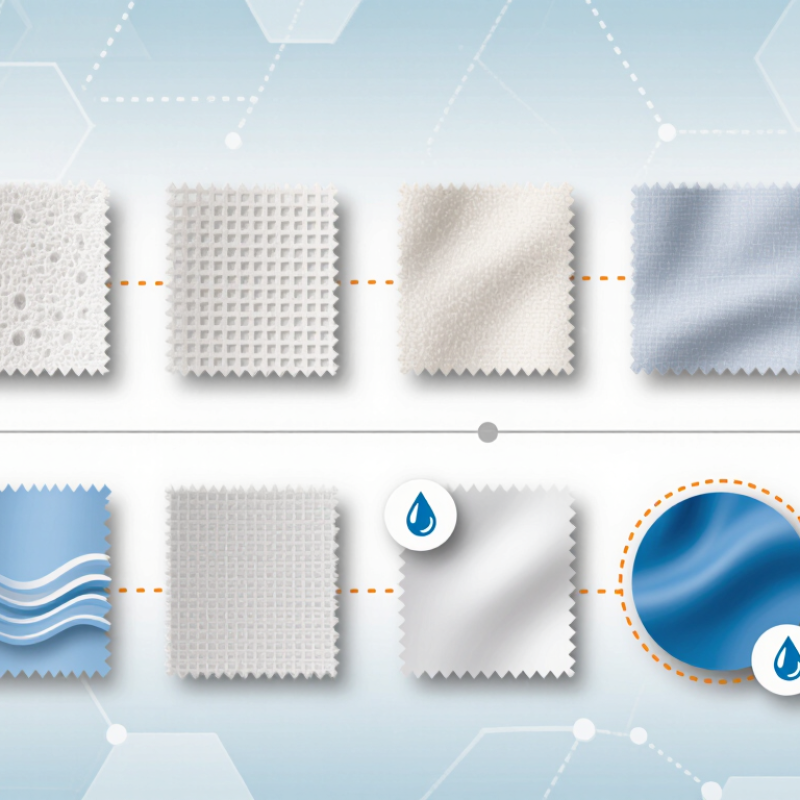
Spunlace Fabric Basics: Structure, Production, and Key Performance Factors
Spunlace fabric is formed by entangling fibers with high-pressure water jets. The process creates a soft, porous web without traditional weaving. Fiber selection controls much of the result. Polyester improves strength and drying speed, while viscose adds absorbency and a smoother hand. Cotton, lyocell, wood-pulp blends, polypropylene, biodegradable fibers, colored grades, embossed structures, and laminated composites complete ten widely specified types.
The production line usually includes fiber opening, web forming, hydroentangling, water filtration, drying, and finishing. Jet pressure, nozzle spacing, line speed, and web weight must stay balanced. Excessive pressure can damage delicate fibers. Low pressure may leave weak bonding. Smithers’ The Future of Spunlace to 2028 projects continuing annual market growth of around 7%, driven by wipes, hygiene, medical, and filtration applications. That growth increases pressure on suppliers to document fiber origin and process consistency.
Performance testing should match the final use. Buyers commonly review tensile strength, elongation, absorbency, basis weight, thickness, lint release, and liquid strike-through. EDANA industry statistics place European nonwoven production at roughly three million tonnes annually, showing the scale of this manufacturing base. Yet a clean specification sheet is not enough. I have seen materials pass laboratory tests but feel harsh during converting. Real production trials matter. Humidity, storage time, and cutting equipment can change the result. Sustainability claims also need caution, because biodegradability depends on fiber chemistry, additives, and disposal conditions.
The Top 10 Spunlace Fabric Types and Their Distinctive Features
Global buyers increasingly compare spunlace fabrics by fiber, basis weight, and end-use performance. Smithers’ The Future of Global Nonwovens to 2028 estimates the global nonwovens market will approach USD 68 billion by 2028. Spunlace remains important because water-jet entanglement creates soft, drapable webs without conventional binders.
The ten main types show clear differences.
1) Polyester spunlace offers strength and abrasion resistance.
2) Viscose spunlace feels softer and absorbs liquids quickly.
3) Polyester-viscose blends balance durability and comfort.
4) Wood-pulp blends improve absorbency and liquid retention.
5) Lyocell spunlace provides a smooth hand feel and high wet strength.
6) Bamboo-blend spunlace supports a soft, natural-fiber positioning.
7) Cotton-blend spunlace adds familiarity and surface comfort.
8) Heavyweight spunlace suits wipes, pads, and protective liners requiring structure.
9) Lightweight spunlace supports facial masks, sachets, and delicate cleaning cloths.
10) Perforated or patterned spunlace improves texture, lotion distribution, and controlled wiping.
INDA’s North American Nonwovens Industry Outlook identifies hygiene, medical, and filtration as major nonwoven demand areas. However, buyers should not treat softness as proof of quality. A 45 gsm viscose web may absorb rapidly, yet tear during wet handling. A 70 gsm polyester blend may feel firmer, but survive repeated wiping better. Testing should include basis weight, tensile strength, absorbency, lint release, pore structure, and microbial cleanliness. Even experienced teams sometimes overvalue a pleasant hand feel. That mistake can become expensive. Real performance depends on converting speed, packaging humidity, storage time, and the final user’s handling conditions.
How Global Buyers Compare Spunlace Fabrics by Quality and Performance
Top 10 Spunlace Fabric Types for Global Buyers
Global buyers compare spunlace fabrics through measurable performance, not appearance alone. Common types include polyester, viscose, cotton blend, lyocell, wood-pulp composite, biodegradable cellulose, apertured, embossed, colored, and laminated spunlace. Polyester offers strong wet durability, while viscose improves softness and liquid absorption. Wood-pulp blends can increase wiping capacity, but may reduce tensile strength. Trade-offs matter.
INDA’s 2024 Global Nonwovens Industry Outlook reports global nonwoven production at approximately 13.8 million tonnes in 2023. This scale makes consistency increasingly important. Buyers should request GSM tolerance, tensile results, elongation, absorbency, lint release, and roll-width accuracy. ASTM and ISO test methods improve comparability across suppliers, although laboratory results may not match production conditions perfectly. That is worth checking.
Smithers’ industry forecasts identify hygiene, medical, and wipes as major nonwoven demand areas. For these applications, hydroentangled structures are often selected for their clean surface and drape. A procurement team should test both dry and wet strength using actual liquids, temperatures, and folding patterns. A soft sample can still tear during dispensing. A thicker fabric can absorb more, but it may block equipment or raise shipping costs. Recycled-content claims also require traceable documentation, not attractive wording. Some buyers still overvalue whiteness. That is an imperfect shortcut.
Top 10 Spunlace Fabric Types for Global Buyers
How global buyers compare spunlace fabrics by quality and performance
The index combines commonly evaluated buyer criteria, including softness, tensile strength, absorbency, process consistency, sustainability potential, and suitability for high-volume applications. Scores are comparative industry benchmarks on a 10-point scale; actual performance varies with fiber grade, basis weight, bonding method, and finishing treatment.
Purchasing Considerations: Compliance, Supply, Pricing, and Customization
Global buyers compare spunlace fabric by more than softness. Common options include polyester, viscose, wood pulp blends, polypropylene, and biodegradable fibers. Each type changes absorbency, strength, lint, and disposal requirements.
Compliance should begin with a documented fiber declaration and traceable batch records. Check chemical restrictions in the destination market, including REACH requirements where applicable. For medical or skin-contact applications, request biocompatibility evidence and controlled production records. ISO 10993 testing may be relevant, but it does not replace product-specific risk assessment. EDANA’s 2023 statistics reported European nonwoven production at about 3.08 million tonnes, showing the scale of this supply chain. Scale does not guarantee consistency.
Supply planning needs more than a sample approval. Ask about monthly capacity, reserve stock, lead times, and backup raw-material sources. Smithers’ Future of Global Nonwovens reports continued demand growth in hygiene, healthcare, and filtration, which can pressure capacity during peak periods. Pricing should separate fiber cost, hydroentanglement, finishing, packaging, freight, and testing. A low quote can still be expensive.
Customization needs measurable targets. Specify basis weight, width, roll diameter, tensile strength, absorbency, color tolerance, and sterilization compatibility. Small changes matter. A softer finish may reduce strength. Higher viscose content can improve absorbency but increase moisture sensitivity. Buyers should test production rolls, not only laboratory samples. This is where purchasing decisions often remain imperfect, especially when sustainability claims lack third-party verification.