


How to Find Tiny Homes Adelaide for Sale?
Finding tiny homes Adelaide for sale can feel exciting, but the search requires more than comparing photographs and prices. A polished listing may show a bright kitchen, timber walls, and a compact sleeping loft. It may not explain transport costs, council requirements, site access, insulation, or connection to water and power. These details can change the real budget quickly.
Tiny-home designer and educator Andrew Morrison explains, “A tiny house is not a smaller version of a big house; it is a different way of living.” This idea matters in Adelaide, where buyers must consider lifestyle, land availability, climate, and local planning rules together. A home suited to a coastal block may not suit a narrow suburban site or a rural property outside the metropolitan area.
Reliable research begins with established builders, clear specifications, and verifiable customer experience. Ask whether the home is built on a trailer or a permanent foundation. Check its dimensions, weight, certification, warranty, and delivery route. Confirm whether the intended council permits its use on your chosen land. Do not rely on a seller’s promise alone.
The process is not perfectly neat. Some listings lack full pricing. Others use attractive images without showing storage, ventilation, or bathroom access. That is where careful questioning becomes valuable. By comparing builders, visiting display homes, and checking the total ownership cost, buyers can find tiny homes Adelaide options that are practical, legal, and genuinely comfortable. A smaller footprint can offer freedom, but only when the details are handled honestly.

Define Your Tiny Home Needs and Preferred Adelaide Location
Finding tiny homes Adelaide for sale starts with defining how you will live, not browsing floor plans. Ask whether the home is for one person, a couple, guests, or occasional holidays. The Australian Bureau of Statistics Census 2021 recorded an average household size of about 2.4 people in Greater Adelaide. This supports compact living, but numbers cannot predict your storage needs. Measure bicycles, appliances, work equipment, and winter clothing. A 25-square-metre home may feel efficient. It may also feel restrictive.
Your preferred Adelaide location should match daily routines. Check walking distance to groceries, public transport, healthcare, and employment areas. Review the South Australian Planning and Design Code before making an offer. Rules may differ for a fixed dwelling, transportable home, or secondary residence. Investigate land ownership, utility connections, parking, flood exposure, bushfire risk, and site access for delivery. Property reports from the Australian Housing and Urban Research Institute also show that location strongly affects housing access and household costs. A cheaper home can become expensive when transport and site preparation are added. I would not ignore this again.
Tips: Visit the site at morning and evening. Listen for traffic. Test mobile reception. Open every cupboard. Ask for written planning information. Compare the total project cost, not only the advertised home price. Your first shortlist may be wrong. That is useful. Recheck it after a realistic week of living habits.
How to Find Tiny Homes Adelaide for Sale? - Define Your Tiny Home Needs and Preferred Adelaide Location
| Need or Location Factor | Suitable Adelaide Area Type | Typical Features to Look For | Why It May Suit a Tiny Home | Important Checks Before Buying | Priority |
|---|---|---|---|---|---|
| Central access and a shorter commute | Established inner and middle suburbs around Adelaide’s central business district | Small established allotments, access to public transport, nearby shops and community services | Convenient for buyers who want to reduce driving and make use of existing urban infrastructure | Confirm zoning, minimum site requirements, vehicle access, parking rules and whether the dwelling can be approved on the specific allotment | High |
| Lower land-cost potential and more space | Outer suburban or semi-rural areas in Adelaide’s northern, southern or eastern fringe | Larger blocks, fewer nearby services, more open space and potentially easier delivery access | May provide room for outdoor living, water tanks, gardens or ancillary structures | Check bushfire risk, flood mapping, wastewater requirements, road conditions, power connection costs and local planning controls | High |
| Beach lifestyle | Coastal suburbs west of Adelaide | Access to beaches, coastal walking paths, local retail and relatively flat terrain | Suitable for buyers prioritising outdoor recreation and a relaxed coastal setting | Assess salt exposure, corrosion protection, coastal hazards, stormwater drainage and any local character or design controls | Medium |
| Quiet surroundings and natural views | Hills and foothill areas east and south-east of the city | Vegetation, sloping sites, scenic outlooks and lower-density residential settings | Can offer privacy and a stronger connection with nature | Investigate slope stability, retaining walls, bushfire attack level, driveway gradients, site preparation and access for transport vehicles | High |
| Family-friendly facilities | Middle-ring suburban locations near schools, parks and shopping centres | Established streets, public parks, schools, medical services and local transport connections | Practical for couples, small households or owners planning to stay long term | Review school-zone rules, local traffic, existing easements, backyard access and the usable outdoor area after placement | High |
| Minimal maintenance and simple living | Well-serviced urban locations with established utilities | Reliable electricity, mains water, sewer connection, waste collection and nearby daily services | Reduces the complexity and ongoing maintenance associated with off-grid systems | Verify service connection capacity, stormwater disposal, telecommunications availability and the total cost of site works | High |
| Off-grid or environmentally focused living | Rural-fringe or semi-rural locations where off-grid systems are permitted | Solar potential, space for batteries, rainwater collection, private wastewater treatment and food-growing areas | Supports lower reliance on mains infrastructure and a smaller environmental footprint | Confirm approval requirements for rainwater tanks, onsite wastewater, solar equipment, greywater systems and waste management | Medium |
| Transporting a completed tiny home | Accessible blocks near sealed roads and suitable turning areas | Wide frontage, overhead clearance, low-gradient access and limited obstructions | Helps reduce delivery risks and additional site-access costs | Measure gate width, road width, turning radius, bridge limits, trees, power lines and the distance from the road to the final pad | High |
| Permanent residential use | Residential land where a small dwelling is allowed under the applicable planning rules | Permanent foundations or compliant dwelling installation, legal address and standard utility connections | Better suited to buyers seeking a primary residence rather than temporary accommodation | Obtain written confirmation from the relevant local council about land use, building approval, setbacks, fire safety and occupancy requirements | High |
| Holiday, guest or secondary accommodation | Properties where ancillary accommodation or short-term use is permitted | Separate access, private outdoor space, parking and proximity to recreation or visitor facilities | May work as a guest suite, rental unit or occasional retreat when legally approved | Check whether the intended use is classified as a dwelling, ancillary accommodation, tourist accommodation or another regulated use | Medium |
| Future resale flexibility | Established suburbs with strong transport, service and employment connections | Clear title, compliant approvals, standard utility connections and an accessible site | A legally documented and easy-to-access property may appeal to a broader range of future buyers | Keep building approvals, certificates, engineering documents, warranties and records of all site works | High |
Planning, building and land-use requirements vary by property and local council area in South Australia. Before purchasing a tiny home or land, confirm the proposed use, installation method and approval pathway with the relevant council and a qualified building or planning professional.
Related Posts
-
Tiny Home Delivery Options for Global Buyers What to Know?
-
2025 Top Affordable Tiny Homes for Comfortable Living on a Budget
-
Top 10 Tips for Living in Manufactured Tiny Homes?
-
Top Portable Homes for 2025 Innovative Living Solutions You Need
-
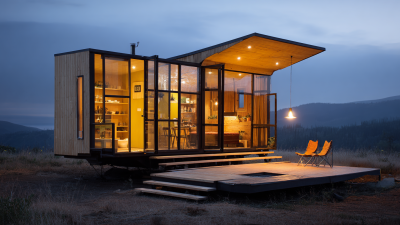
2025 Guide to Portable Homes: Top 5 Trends & 10 Creative Uses for Tiny Living
-
How to Choose the Best Portable Tiny Home for Your Lifestyle Needs