How to Choose SPC Click Floors for Your Project?
Choosing Spc Click Floors is not simply a matter of matching color with furniture. It involves moisture, subfloor flatness, traffic, installation method, and long-term maintenance. Grand View Research reports that the global luxury vinyl flooring market has grown beyond USD 20 billion, reflecting strong demand for durable, water-resistant floor systems. However, market growth does not guarantee suitability for every project. A beautiful plank may still fail on an uneven slab.
A reliable selection process begins with the room itself. Measure temperature changes, sunlight exposure, doorway transitions, and expected rolling loads. Check the subfloor with a straightedge before comparing surface textures. The National Wood Flooring Association emphasizes that substrate preparation strongly influences flooring performance. This matters because click-lock joints can separate when the base is unstable. Installation instructions from the manufacturer should also be compared with ASTM F3261 or ISO 10582 requirements, where applicable.
Look beyond thickness and decorative wear layers. Confirm dimensional stability, locking-system testing, slip resistance, acoustic performance, and indoor-air certifications such as FloorScore. The Resilient Floor Covering Institute identifies product emissions and responsible installation as important indoor-environment considerations. A thicker board is not automatically better. That assumption deserves reconsideration. For kitchens, retail spaces, and busy hallways, compare warranty terms with actual traffic conditions. Request a full carton sample, then inspect its edges, click strength, color variation, and sound underfoot. No method is perfect, and project data may be incomplete. Still, careful evidence beats a rushed showroom decision.
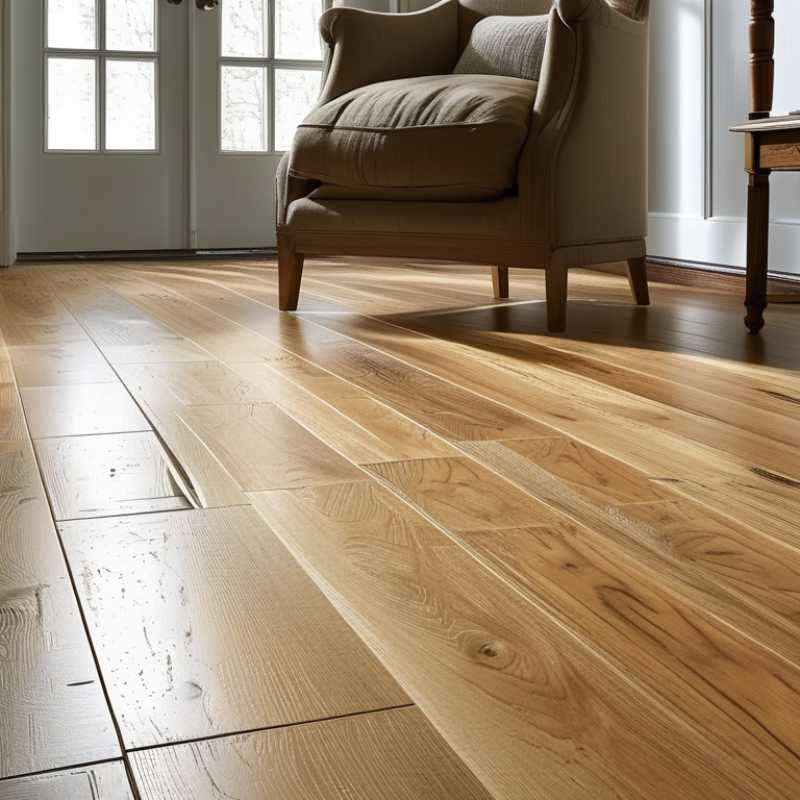
Understanding SPC Click Floor Construction and Performance
How to Choose SPC Click Floors for Your Project?
Understanding SPC Click Floor Construction and Performance
SPC click flooring combines limestone powder, PVC, stabilizers, a decorative film, and a protective wear layer. This dense core gives each plank strong dimensional stability under daily pressure. The click profile locks boards together without adhesive. I always inspect the joints closely. A clean, tight connection matters more than attractive surface printing.
Construction affects real performance. A thicker wear layer generally offers better resistance to scratches and scuffs. However, thickness alone does not prove quality. Check the technical sheet, surface treatment, warranty terms, and independent test results. A rigid core can handle moisture better than many wood-based floors, but it is not a license to ignore spills or standing water. Concrete subfloors still need proper moisture checks.
Installation conditions deserve equal attention. The subfloor should be flat, firm, clean, and dry. Small ridges may create hollow sounds or stress the locking system. Leave the recommended expansion gap around walls, cabinets, and fixed objects. Underlay requirements also vary, and extra cushioning can sometimes weaken the click connection. In busy rooms, I compare abrasion ratings, slip performance, sound data, and expected traffic before choosing a design. Dark surfaces look elegant, but they may reveal dust and scratches sooner. That detail is easy to miss.
Assessing Project Needs Before Selecting SPC Click Flooring
How to Choose SPC Click Floors for Your Project?
Assessing project needs should come before comparing colors or surface textures. Measure each room, including alcoves and door recesses. Add a small allowance for cutting waste. A practical range is usually five to ten percent, depending on the layout. Check the subfloor carefully. It should be dry, firm, clean, and reasonably level. Uneven areas can create movement, noise, or visible gaps after installation.
Think about daily use, not just appearance. A busy hallway needs strong wear resistance and a secure click connection. A bathroom requires careful moisture management, especially around edges and plumbing. For bedrooms, warmer visuals and reduced foot noise may matter more. Also inspect door clearances and transition heights before ordering.
I once saw a beautiful floor fail because the doors were not checked. That detail is easy to miss.
Tips
Request product samples and inspect them under your actual lighting. Compare thickness, wear-layer rating, locking design, and installation guidance. Confirm whether an underlay is required or already attached. Keep several unopened planks for future repairs. Do not assume every room has the same needs. A simple checklist helps, but it cannot replace an on-site inspection. Pay attention to installer experience, too. Even a reliable material can perform poorly when the subfloor is rushed or preparation is incomplete.
Checking Installation Conditions and Click-Locking Compatibility
How to Choose SPC Click Floors for Your Project?
Choosing an SPC click floor starts with the room, not the color chart. Inspect the subfloor under strong side lighting. Uneven areas can stress joints and create hollow sounds. Many installations require a flatness tolerance of about 3 millimeters over 2 meters. Confirm the exact requirement in the installation instructions.
Check moisture before delivery. Concrete may look dry while retaining harmful moisture below the surface. Use a suitable moisture meter or arrange professional testing. Remove dust, oil, loose adhesive, and raised fasteners. The floor should also be stable, clean, and fully cured. Small defects matter.
Click-lock compatibility deserves equal attention. Different profiles may use angle-lock, drop-lock, or hybrid connections. Do not assume matching thickness means matching joints. Compare the locking geometry, board dimensions, and approved underlayment requirements. Test several boards on a flat surface. The seams should close evenly without excessive force. Never hammer a joint that resists connection. It may be misaligned or incompatible.
Leave the specified expansion space around walls, pipes, cabinets, and fixed objects. Maintain the recommended room temperature during acclimation and installation. A sample can still mislead. Full-board testing often reveals tiny gaps or damaged edges. I have seen installers focus on appearance and overlook floor movement. That mistake is easy to repeat. Recheck the first three rows before continuing.
Evaluating Durability, Maintenance, Cost, and Supplier Support
Choosing SPC click flooring begins with the room’s real demands, not a showroom impression. In busy hallways, offices, or rental units, inspect the wear layer, core density, and locking profile. A thicker wear layer can resist scratches, but it cannot correct poor subfloor preparation. Installation experience often shows small concrete ridges stressing joints far earlier than expected. Preparation still matters. Ask for technical data, test methods, and installation tolerances. Reliable suppliers explain limitations, not only strengths.
Maintenance should be measured over several years. SPC usually handles spills and routine mopping well, yet abrasive sand can dull the surface. Use entrance mats, felt pads, and a cleaner approved for resilient flooring. Avoid excessive water. For commercial areas, estimate cleaning labor, replacement planks, and downtime. A low purchase price may become expensive when repairs interrupt operations. Request a sample and test it near a doorway for several weeks. This practical check reveals dust marks, joint movement, and color changes better than photos.
Supplier support affects project risk as much as product specifications. Confirm stock continuity, spare cartons, warranty conditions, and response times before ordering. Ask who handles installation questions and whether written guidance is available in your language. Support should clarify acclimation, subfloor moisture limits, expansion gaps, and claim evidence. No selection is perfect, and project conditions can expose weaknesses that datasheets overlook. Compare delivered cost, not just square-meter pricing, then record every assumption before approval.
How to read this chart: The 1–10 planning index summarizes commonly verified SPC click-floor indicators without using company or brand data. Durability considers wear-layer thickness, core stability, and locking-system performance. Maintenance reflects water resistance, stain resistance, and cleaning requirements. Cost considers material, installation, and expected replacement value. Supplier support includes warranty clarity, technical documentation, stock availability, and response time. Confirm all specifications with project quotations and technical datasheets before purchasing.